How a physical observation becomes evidence.
The gap a validation engagement closes, and the thread it runs on: capture under real conditions, validation against stated criteria, and a record that follows the system into deployment. This is the design the Evidence Record is built on, and parts of it are still in development.
Physical AI has a data problem.
Intelligent machines can only become reliable when they can continuously learn from the environments in which they operate.
But physical-world data is fragmented across sensors, machines, simulations and operational systems.
Neicrone is building the infrastructure to connect them.
From realityto intelligenceto safer deployment
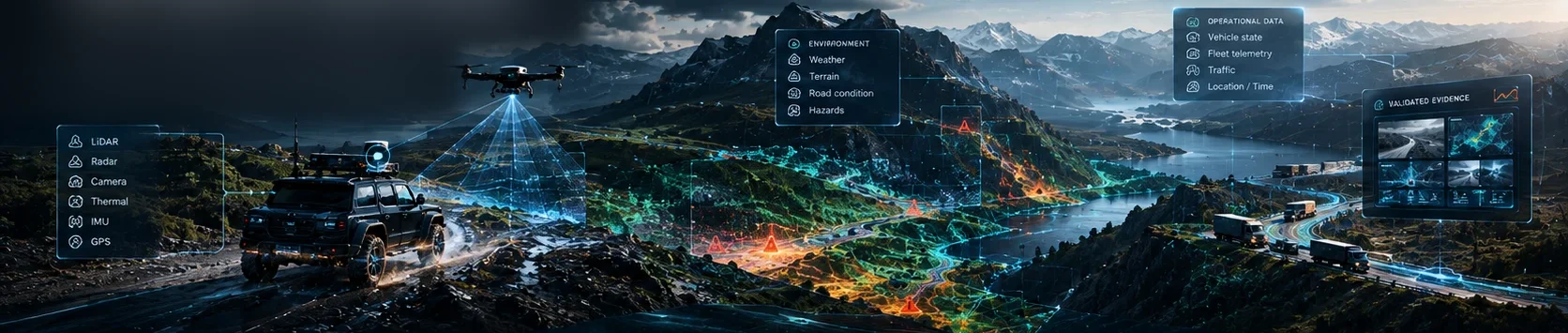
Machines need to see.
Connect heterogeneous sensors and physical signals into a coherent representation of the environment.
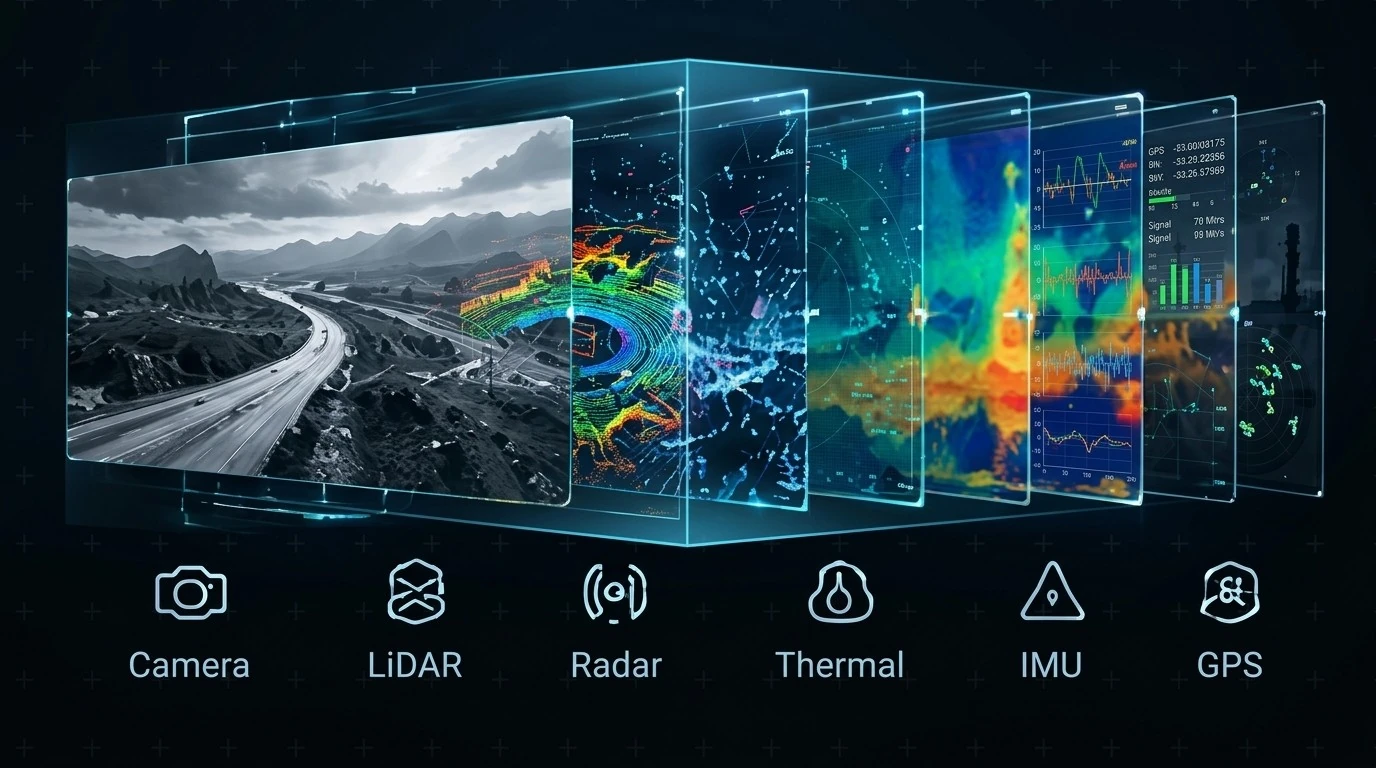
Machines need to understand.
Combine spatial, temporal and machine-state information to understand what is happening around a system.
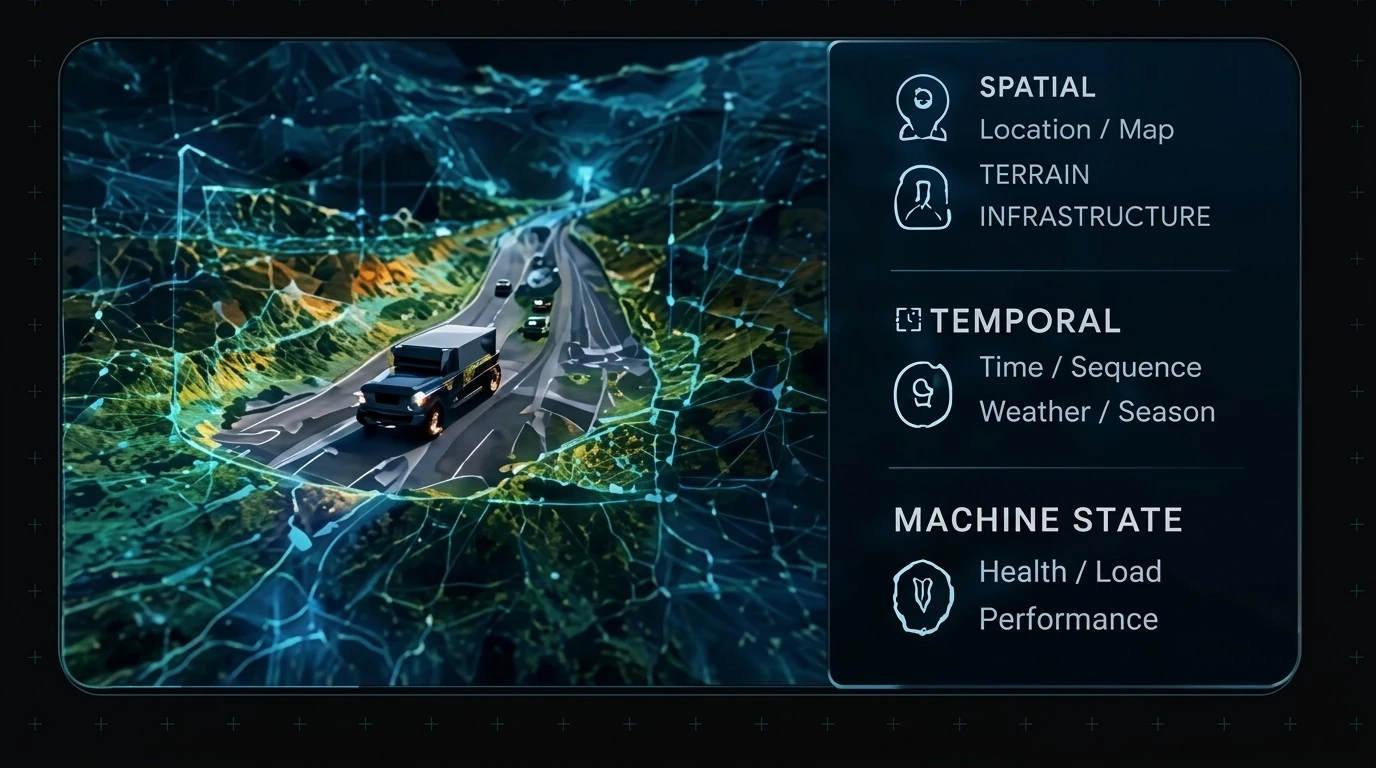
Systems need to learn.
Transform raw observations into structured datasets and operational records that can support evaluation and improvement.
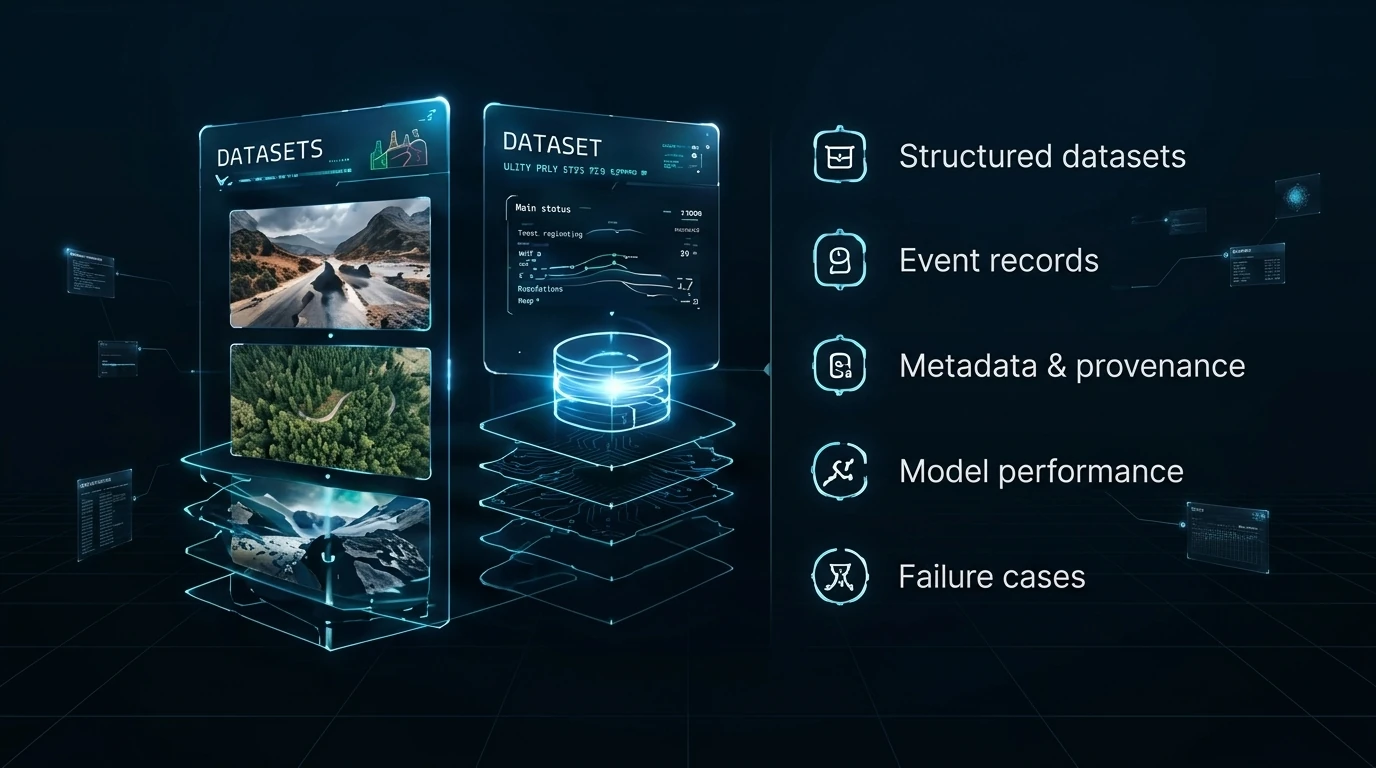
Physical intelligence needs oversight.
Introduce human review, traceability and operational controls between autonomous systems and consequential real-world actions.
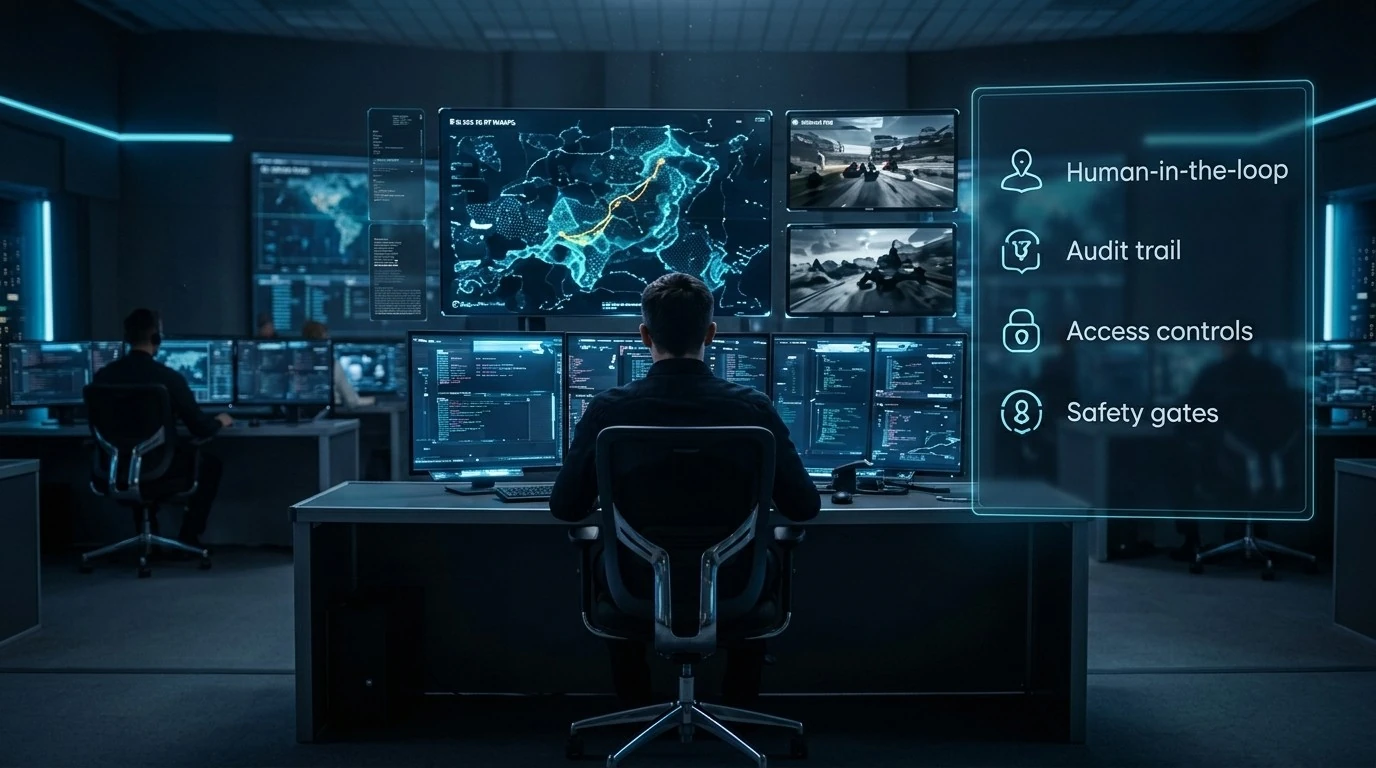
Three layers of evidence.
From capture through validation to deployment, the substrate is the continuous thread.
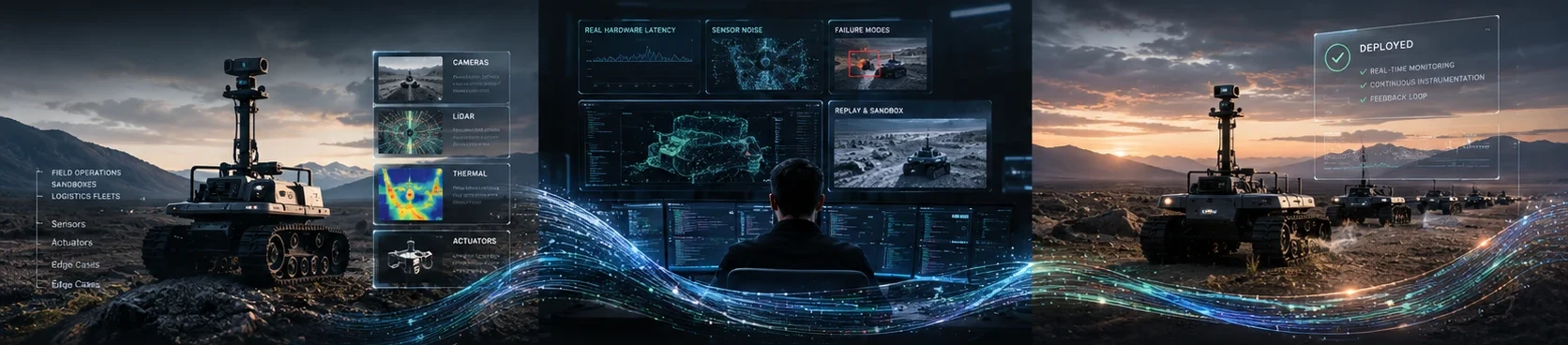
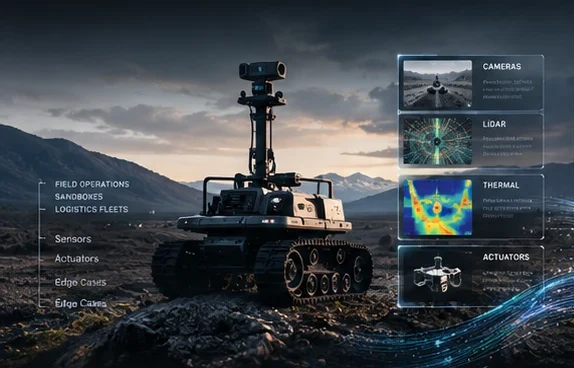
Physical AI systems operate on real substrate.
Field operations, sandboxes, and logistics fleets generate raw evidence: sensor streams, actuator commands, outcomes, edge cases. Andromeda selects which substrate matters, sensor pipelines compress and prioritize, and every record is designed to carry its chain of custody.
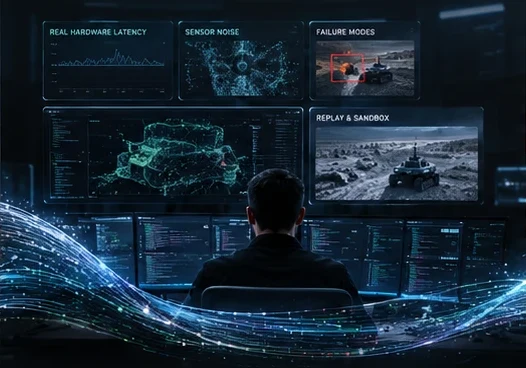
Evidence flows into safety gates.
Models are tested against real hardware latency, real sensor noise, and real failure modes. Edge cases found in the field are replayed in sandboxes. The model either passes, or the substrate shows why it should not.
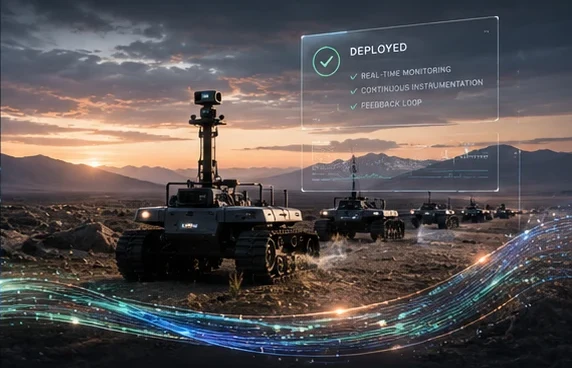
Cleared models go into production.
Production fleets are designed to run under continuous Substrate instrumentation. New edge cases and failure modes feed back into retraining and sandbox scenario generation, so the loop keeps closing.