Built on one argument
Capability is outpacing deployment. The constraint on physical AI has moved downstream of the model, into physical evidence — and that is the infrastructure Neicrone is building.

Jerson Boyd Milan
Founder, Neicrone
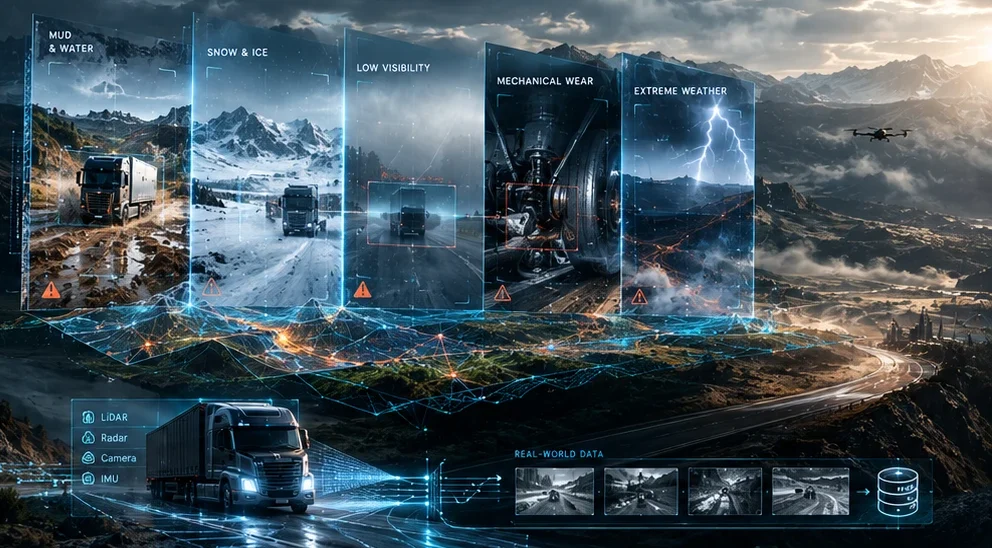
Neicrone is built on one argument: capability is outpacing deployment. Models that perceive, reason and act are improving quickly. The thing holding physical AI back is no longer mainly the model. It is the evidence about how that model behaves when it meets the real world.
The bottleneck is not the model
Vision-language-action models are advancing fast, but hardware deployments still fail, because real-world physical data is scarce, expensive, and dangerous to harvest in public spaces. The constraint has moved downstream, into physical evidence.
Simulation flatters a model exactly where the physical world does not.
A simulator is confident everywhere and right in some places. The failures that matter tend to live in the conditions it does not model well:
- Non-linear surface conditions — mud, standing water, ice transitions.
- Sudden weather shifts inside a single trajectory window.
- Mechanical wear that drifts across actuator duty cycles.
- Public-space data collection that is legally constrained, expensive and unsafe.
What Neicrone is building
Neicrone builds the software infrastructure for deploying and operating AI systems beyond the screen: edge sensor pipelines, instrumented environments that put perception and control against real conditions, and the evidence trail connecting a field observation to the dataset it ends up in.
That evidence trail is the point. A field observation is only useful to a model team if it can be traced — captured, validated and curated with a record of where it came from — before it is trained on and before a fleet relies on what was learned from it.
Where the project stands
Neicrone is early and founder-led. These notes will follow the work as it is built: what gets instrumented, what the field shows that simulation did not, and what it takes to turn a real-world observation into evidence a model can be held to.